St Francis Day: Learning from Creation
Today we remember St. Francis, and we’ll also reflect on learning from nature.
Of St Francis, For All the Saints says this: Francis of Assisi was born in 1181. After a relatively frivolous life, he rejected everything he had received from his father and embraced poverty totally. Gradually others gathered around him, and he began preaching tours around Italy. He prepared a simple rule of life for his followers, and the Order of Friars Minor was born. The order grew rapidly and spread all over Europe and beyond. Francis combined in his life many strands: mission preacher, lover of animals, ascetic, mystic, dramatic fool for Christ, happy singer, troubadour of God. He died in 1226 and was canonised two years later. (FATS)
St Francis Day is how we end our year sojourn through the Season of Creation, and given St Francis's affinity for creation, and given our theme: Technology A.I. and Being Human, I want to consider what we, in an increasingly digital world, might learn from nature. How might the created order be our teacher? How God might speak, teach, and challenge us through creation.
Before you all up and leave because you think I’ve finally lost the plot and gone all hippy on you, there are instances in Scripture where creation, specifically animals, have been a source of salvation, teaching, and challenge (that’s not to mention that many of the biblical writers write about creation.
Here are some examples:
In 1 Kings, the prophet Elijah tells King Ahab (who wasn’t a great king) that a drought is imminent. Elijah isn’t immune to the drought's deadly consequences, and the “ceremonially unclean” ravens come to his rescue, providing his morning and evening meals.
Then there’s Jonah. After being flung overboard, Jonah is rescued by a whale, a creature of the frightening and chaotic seas. In stark contrast to Jonah, the whale obeys God, becoming a vehicle of deliverance, returning Jonah to land so he can see through the task the Lord had set him.
Finally, in Numbers, Balaam’s donkey suddenly changes direction and saves him from a sword-wielding angel. Unaware of the donkey’s life-saving action, Balaam took exception to the mule’s change of direction and beat the donkey. The donkey is then given the gift of speech and pleads his case, which the angel of the Lord supports, saying that if it weren’t for the donkey’s intervention, Balaam would be dead.
Of these stories, Andrew Shepherd says, “It’s worth reflecting how often we, like Jonah and Balaam, overlook or are ignorant of the ways in which the creatures that surround us are messengers of grace and agents of deliverance. Moving beyond [a human-centric] worldview requires us, like Balaam, to be unseated, metaphorically, from our high horse.” (IFES Word & World - Hope for Creation, Issue 8, January 2020)
In other words, we can learn from nature if we have eyes to see and ears to hear. So, what might we learn from nature?
This week’s Kareen shared this quote with me:
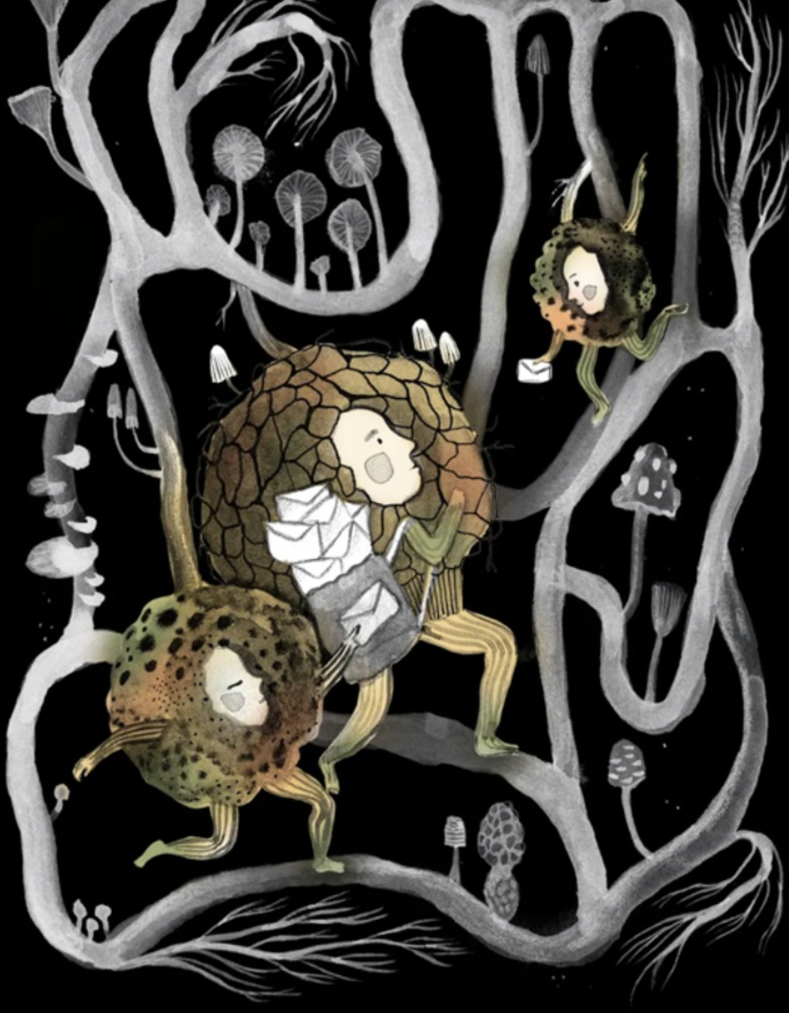
“…most thrillingly of all, there is mycelium & the ‘wood-wide web’. That is something I can pin all my faith on: the problem-solving, adaptive properties of fungi, so miraculous that in my quieter moments I imagine their intricate interweaving underpinning everything below ground & blurring categorical edges between beings above ground. My mind stretches to try to understand the implications, and to understand why this isn’t one of the most important things we know” (Fireweather, Miranda Darling).
For those who don’t know (like I didn’t), “mycelium” is the root-like, vegetative part of a fungus, made up of a network of tiny, thread-like structures called hyphae.
The “wood-wide web” (“mycorrhiza”) is a mutually beneficial partnership between a fungus and a plant root (thanks to Kareen for telling me about this). New Zealand Geographic reports that studies show plants, both herbaceous and woody, communicate through fungal networks (although grasses and trees use different types of mycorrhiza), even when they aren't the same species (https://www.nzgeo.com/stories/the-wood-wide-web/). Essentially, plants of different species work together in mutually beneficial ways, such as warning other trees about soil toxins and sharing resources, e.g., carbon, to ensure the flourishing of all.
That plants of different species are somehow connected and, for the most part, work together for one another’s common good (and ours) is worth reflecting on. (It’s not always happy families; plants, like humans, aren’t immune to self-centred behaviour, but for now I want us to focus on the positive aspects of this idea).
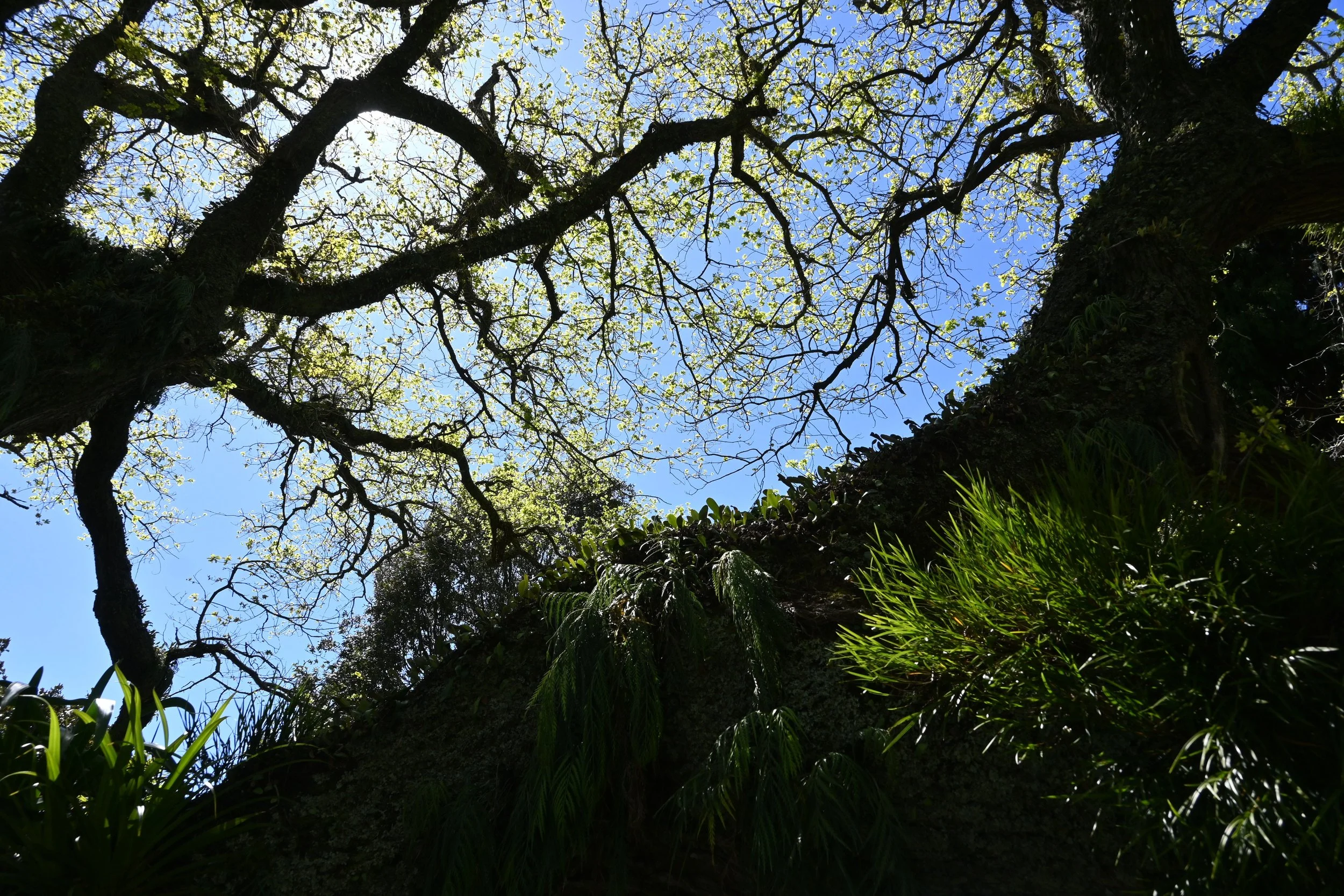
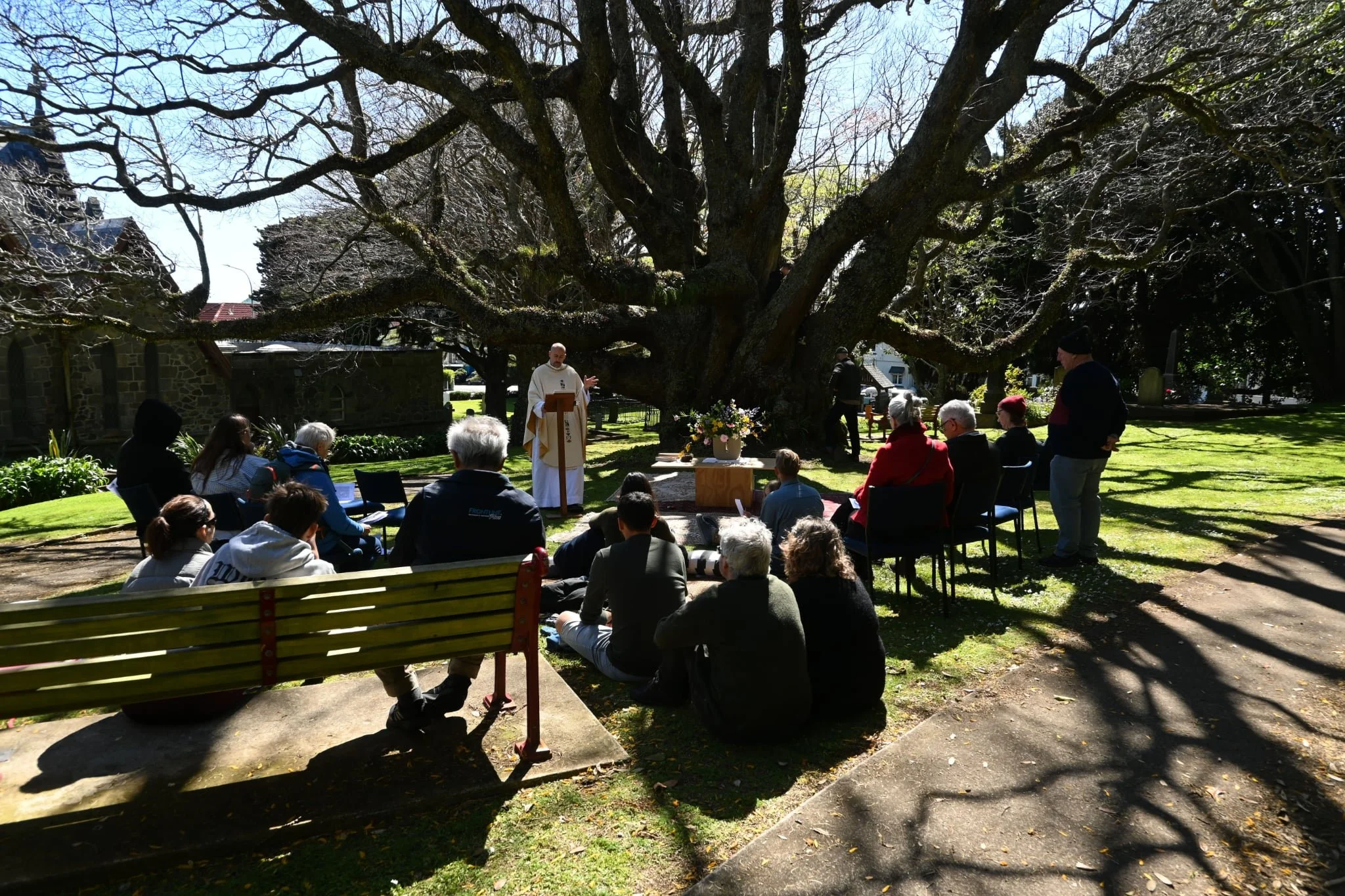
This got me wondering about our churchyard garden and about mutually beneficial networks that might exist beneath the surface; how the trees and plants in our churchyard, both native and exotic, including kauri, oak, karaka, chestnut, kawakawa, camellia, and harakeke, might be sharing resources, communicating with one another, and finding ways to live, work together constructively, and flourish amid change, war, dispute, joy, and sadness; a shared life that began 180 years ago, continues today, and unfolds into tomorrow.
What might we learn from the quiet, subversive, yeast-like symbiotic relationships unfolding before us in our churchyard garden? Could it be a site of challenge, inspiration, and encouragement for us in our work of reconciliation and peace-making? How might it be a picture of where we want to get to?
Creation, it seems to me, lives out its call most profoundly and beautifully when it adopts a posture of interdependence, remains open to the gift of the other, and does the hard work of figuring out how to live well together. Maybe nature has the edge on us when it comes to working and living together in mutually beneficial ways?
Maybe God’s creation, unfolding right outside our door, has something to teach us?
Reflective questions:
1. What might creation be trying to teach me about living well with others?
2. Where in my life am I being invited to move from independence and self-sufficiency towards interdependence and receiving the gifts of others?
3. What might our churchyard—and the life quietly unfolding beneath its surface—teach us about becoming a community of reconciliation, peace, and mutual flourishing?
A prayer:
Sovereign God, all creation worships you: wind in the trees, waves of the oceans, and rivers in their flowing. Help us attend to creation, its fauna, flora, and wildlife, as our shared home. Teach us to learn from it, that all creation may flourish for your glory. In Jesus’ name. Amen.
Illustration (top): Enzo Pérès-Labourdette
Photos (below): Kareen Durbin