Rev Dan's Easter Reflection
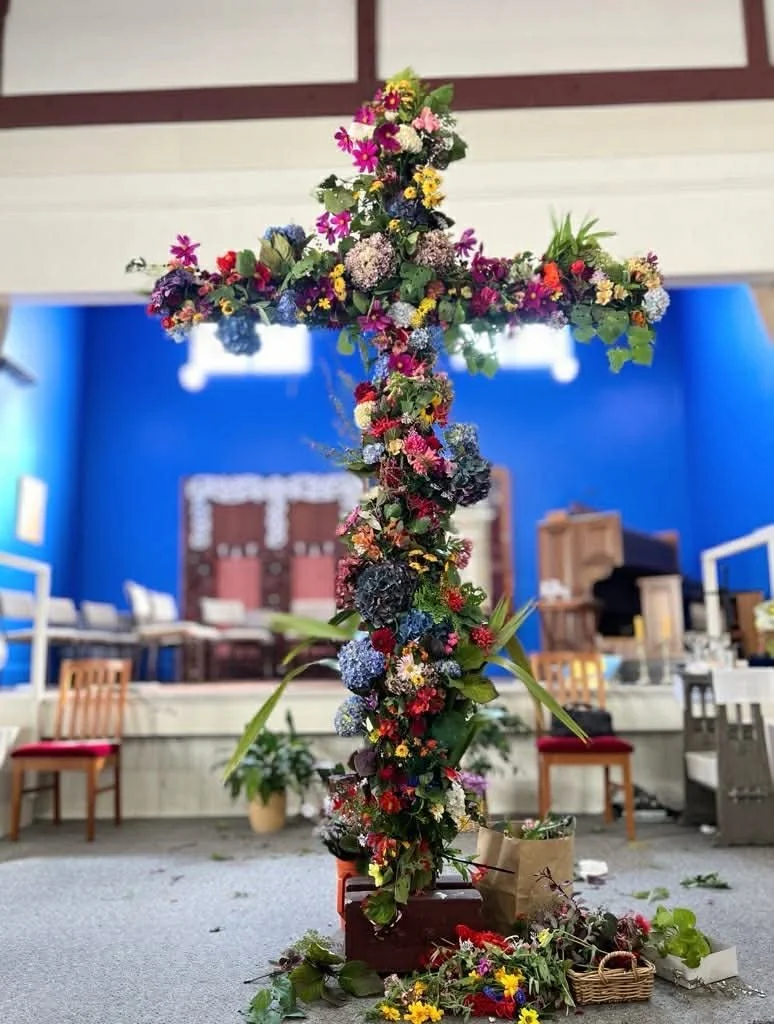
The organ swells as Rya, Indie, and Raewyn lift an old wooden cross covered in flowers. Smiles erupt, astonished gasps ring out from some (especially those who have never experienced this before), and applause breaks out. Christ has risen! It’s a beautiful moment (and, as an aside, having women raise the cross seems appropriate; they were the ones who stayed and were the first at Jesus’ tomb that first Easter morning).
The Flowering of the Cross is a cherished tradition here at Te Whare Karakia Nui o Taranaki (The Taranaki Cathedral). We observe it every year, and it never fails to move me. A space is cleared in front of the stage. An old wooden cross, encased in chicken wire, lies on the floor. Nearby, flowers, flax, and kawakawa are gathered. (And I should say, upfront, that it’s not lost on me that picking a whole lot of flowers isn’t unproblematic in its own way. As well as being beautiful, it’s perhaps a reminder that our attempts to capture something of resurrected life on this side of the eschaton are fleeting.)
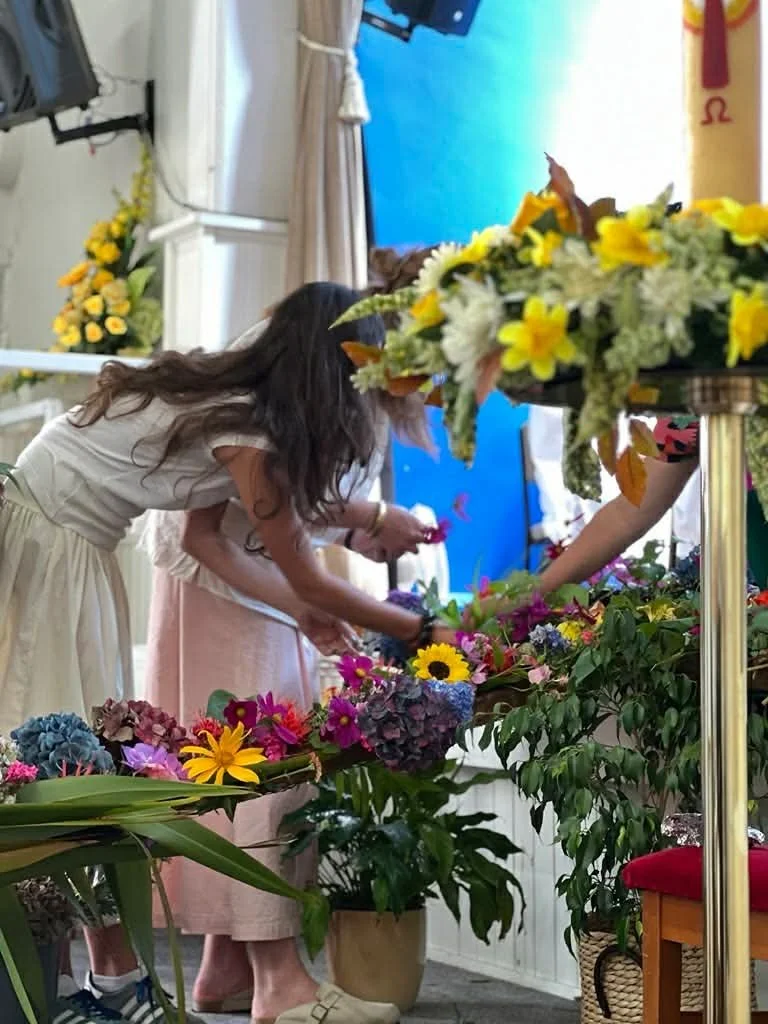
During communion, after receiving the bread and wine, people—young and old—make their way to the flowers to choose one, or a small bunch. Then they move to the cross, placing their flowers upon it—upon this instrument of state-sanctioned barbarity, a means not only to kill but to control, to remind people of the consequences of rebellion. And slowly but surely, this instrument of death is transformed into something beautiful—a sign of new life.
It becomes a profound reminder, and a pointer, to what Easter Sunday is about: Jesus’ resurrection from the dead, the overcoming of death, the inbreaking of the Kingdom—a new way bursting forth when all seemed lost.
Christ is risen, he is risen indeed!
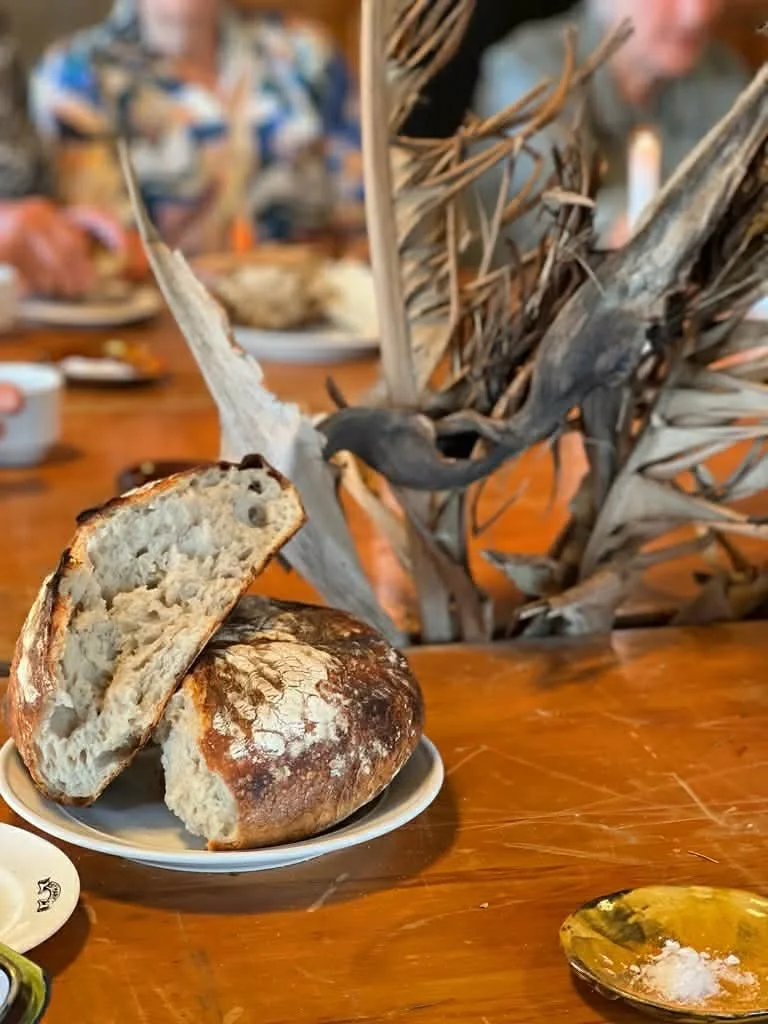
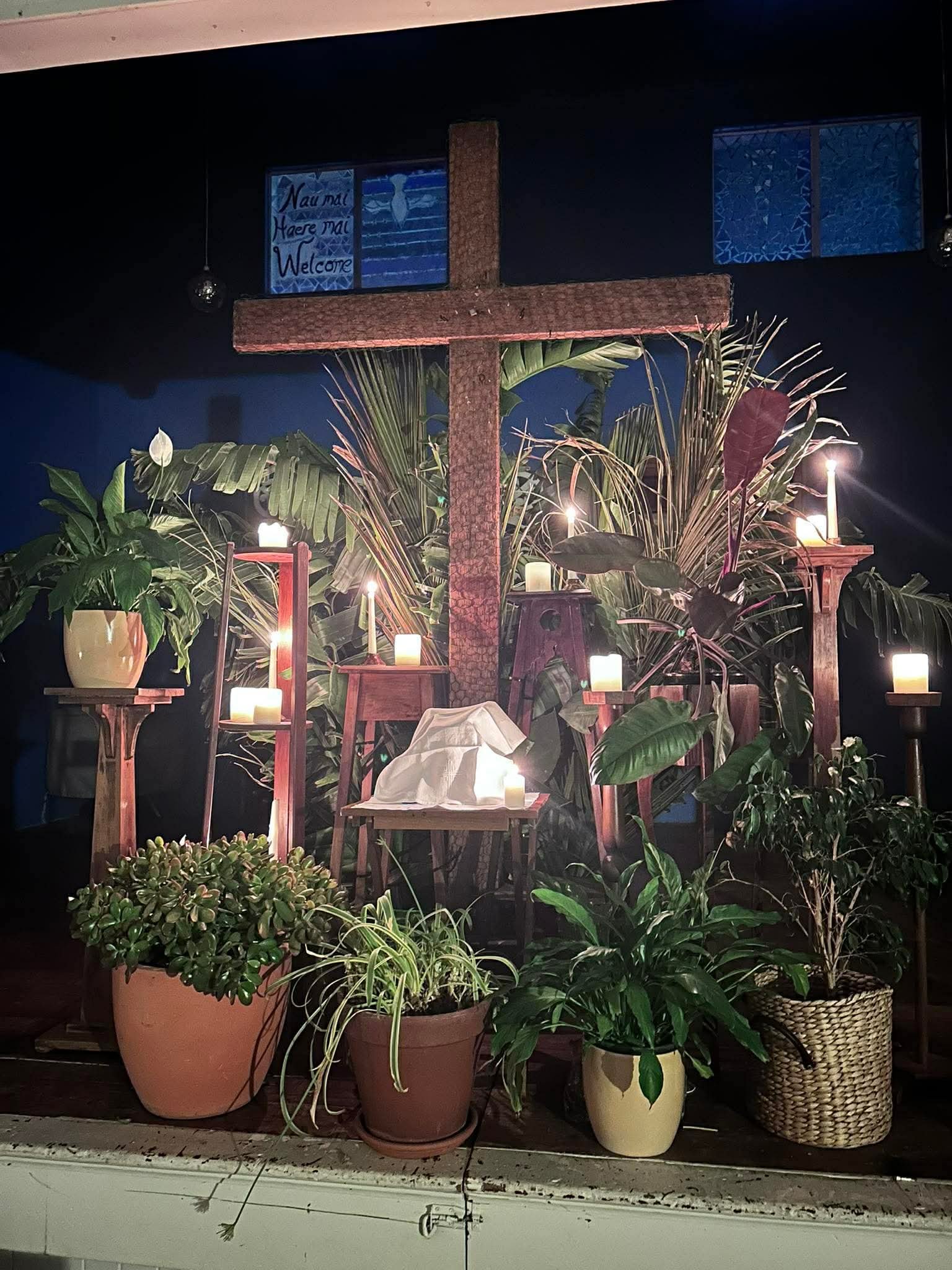
Interestingly, creation was a bit of a theme for us this year: we engaged with Sarah West’s “Desert to Garden” Lenten devotional; we held a Holy Thursday community meal in our church hall, thoughtfully decorated by Kareen using dry, foraged foliage, and featuring homemade, fresh sourdough lovingly baked by our friend Courtney; we created a Garden of Repose as a point of reflection and contemplation at our Tenebrae (think Christ in Gethsemane and garden tomb) and Good Friday service; and, of course, we flowered the cross.
This year, as I reflected on these things—the journey through Lent, Holy Week, the Garden of Repose, and the flowering of the cross—it was the flax, flowers, palms, and kawakawa, creation itself amid the pain of crucifixion and betrayal, that arrested me in new ways.
We are an Eco Church, not because we are particularly eco, but because we are trying; being part of a wider community that seeks to love, tend, and nurture creation provides a sense of accountability to this work. As the cross was raised, the music played, and the flowers punctuated our service with colour and life, I was reminded of our connection with Eco Church, with our commitment to being good stewards of God’s good earth, and, vitally, that resurrection life isn’t humanity’s alone—that the planet suffers, mostly at our hands—and that Christ’s resurrection life belongs to the forests, rivers, lakes, and oceans, and all who inhabit these places, too.
As John says, “Then I saw a heaven and a new earth” (not just a new humanity).
Jürgen Moltmann says, “Believing in the resurrection does not just mean assenting to a dogma and noting a historical fact. It means participating in this creative act of God’s … Resurrection is not a consoling opium, soothing us with the promise of a better world in the hereafter. It is the energy for a rebirth of this life. The hope doesn’t point to another world. It is focused on the redemption of this one.” (Jurgen Moltmann, Jesus Christ for Today’s World)
Resurrection means new life—new life for humanity, but also, just as vitally, new life for all creation. And if resurrection is new life for all creation, both human and non-human—if it is the bursting forth of God’s future reign here and now—then what does it mean for us to participate in, and to be agents of, God’s resurrecting life for all creation today? Where do we see resurrection life bursting forth from creation despite humanity’s attempts to extinguish and exploit it, and what might we learn, from creation itself, about life, death, new life and God?
Perhaps that’s a question you might ponder this Easter Season.