Cathedral Project Update
Last year the government announced new regulations for earthquake-prone buildings. While the announcement at first lifted our hopes, the new benchmark announced still left us in the high-risk category. Instead of a uniform New Build Standard (NBS) percentage applied to all buildings, the new rules will account for building type, earthquake propensity and population density.
The new regulations focus on a “tiered risk mitigation” approach, with the highest tier targeting buildings that are “unreinforced masonry and heavy-material buildings 3 storeys or higher” and are also next to footpaths or State Highways. Unfortunately, the unreinforced Taranaki Cathedral is a few metres from a footpath on State Highway 45! This leaves us in the top-tier category, requiring repair.
Our remediation plan and costings to date have been based on strengthening St Mary’s to a 67% NBS. The Waikato Taranaki Diocesan Policy has set this rate: “Remedy to 100% NBS is the ideal. As an interim state, remedy to above 67% NBS is required in the medium term”. This level of repair is the basis for our $20.2m budget. This cost has left the project unachievable.
RCP, our project managers, have reviewed our plan to identify cost-saving opportunities. They suggested some potential savings. Together with Holmes Engineers, Tennent Brown Architects, and our Heritage Architect, they asked the Commission for a mandate to pursue further savings through a plan based on a minimum of 34% NBS. In November 2025, the Commission sought Standing Committee approval to proceed with this. That permission has been granted.
RCP is set to explore a staged remediation plan for Taranaki Cathedral, targeting the lower 34% NBS, provided it is safe. Other dioceses in the country have set this as their minimum rate. That plan, including updated consents, is expected around Easter 2026 and will be reviewed by the Commission and the Standing Committee for approval.
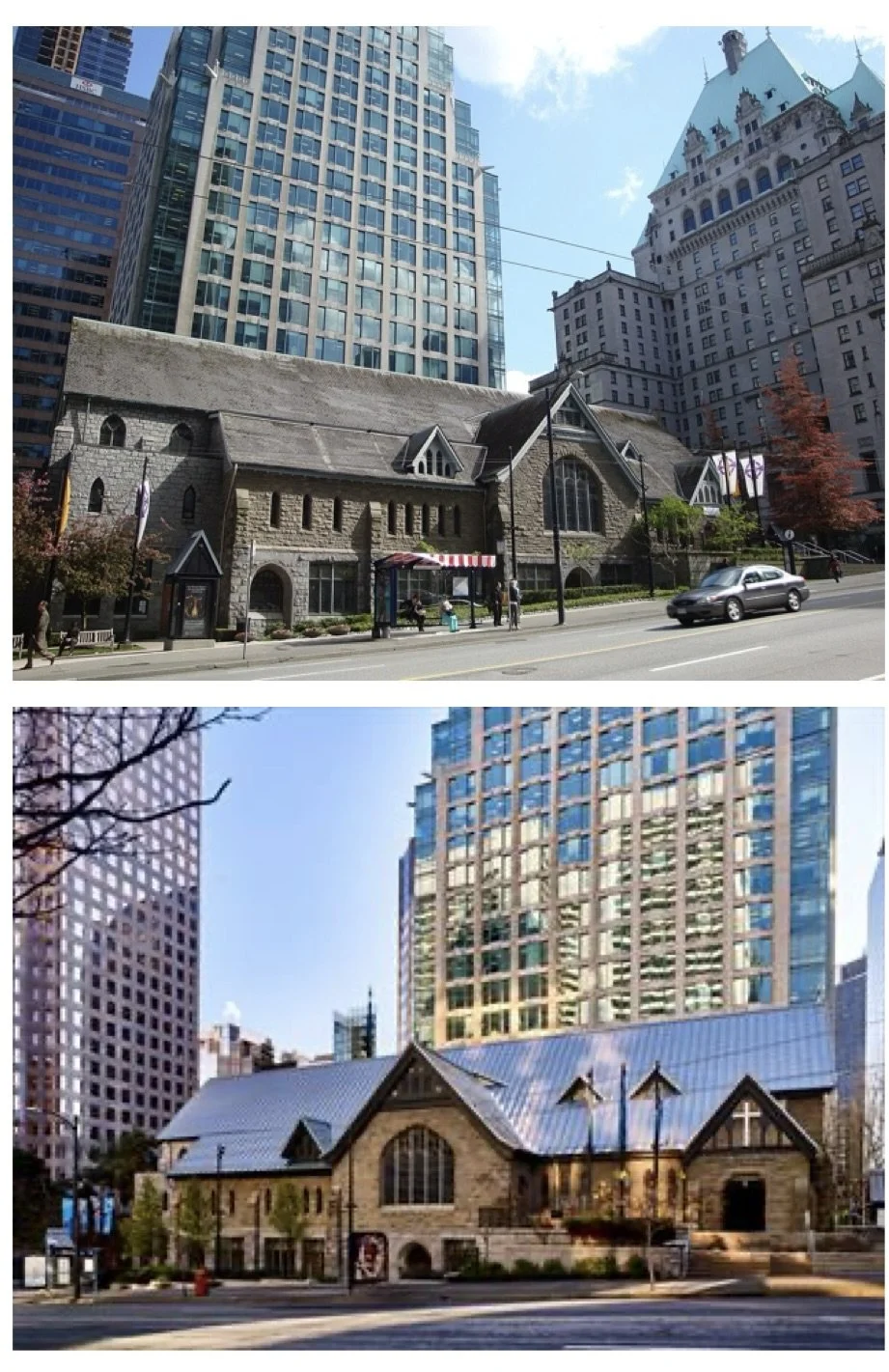
The ability to find significant savings is on the roof. For example, replacement Slate is $1.9m of the budget. $1.2m could be saved by switching to Colour Steel. The benefits are that it makes the roof significantly lighter and requires less engineering to make it earthquake-proof. There is also a significant reduction in scaffolding costs. The negatives are two-fold. First, it’s a different look. Secondly, the lifespan is more likely to be 25+ years than 100 years for slate. Regarding the first point, RCP has given the example of Vancouver Cathedral, which was in the same position as we are. They chose Colour Steel over their historical slate.
We include images in this report to demonstrate that alternative materials can look amazing. They also afford a significant cost saving. RCP has suggested the original budget could be halved. While we are not there yet, we are closer. I hope our community can find encouragement in the incremental steps forward.
Mere Kirihimete / Nadelik Lowen!